
With the increasing complexity of the global security environment, military leadership is being called upon to evolve beyond traditional operational competencies toward strategic foresight, institutional agility, and multidimensional decision-making. Rapid geopolitical realignments, intensifying strategic competition, technological disruption, economic uncertainty, and the expansion of threats into cyber and information domains are redefining how nations conceive security and leadership. For developing nations in particular, the imperative is not merely to respond to change, but to anticipate it, adapt to it, and strategically position themselves within an increasingly fluid international order.
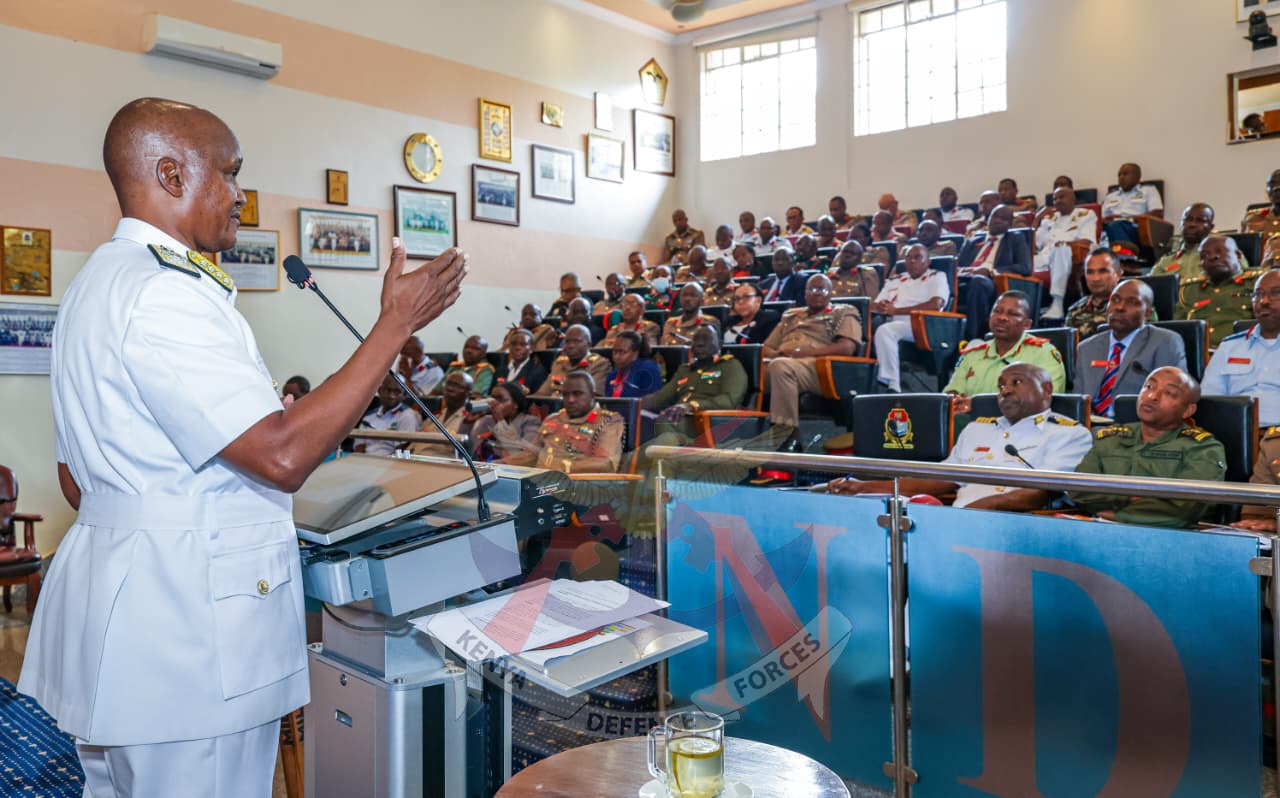
On 21st May 2026 therefore, participants of Course 28/2025–2026 at the National Defence College (NDC), a College of the National Defence University-Kenya (NDU-K), received a High-Level Lecture of Opportunity from the Chief of the Defence Forces (CDF), General Charles Kahariri, themed “Navigating Leadership in the Developing World in an Era of Strategic Flux.”
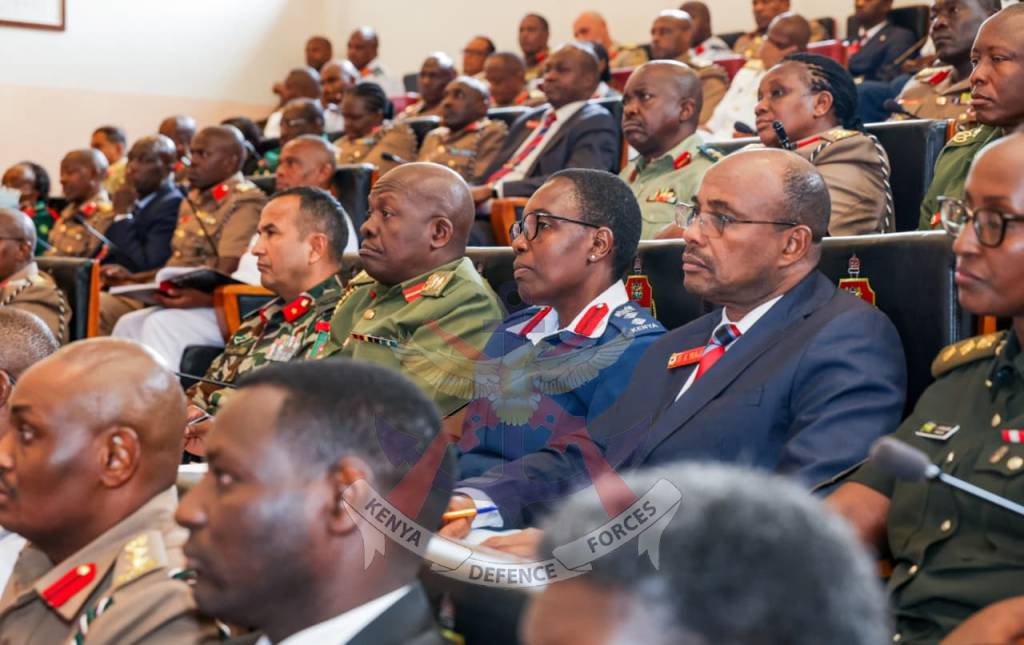
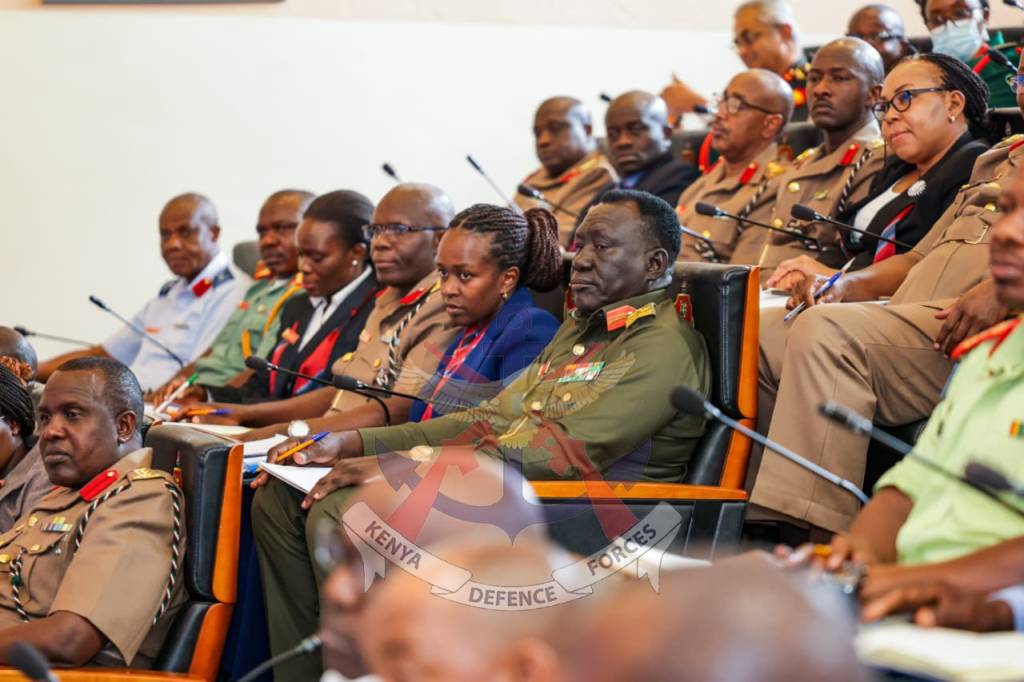
The lecture provided a timely strategic reflection on the evolving demands of leadership in an age where security challenges are increasingly interconnected, transnational, and unpredictable. Addressing the senior military officers and strategic-level participants, General Kahariri observed that the international system is undergoing profound transformation, marked by shifting alliances, geopolitical recalibration, technological competition, and emerging centres of influence that continue to reshape global power dynamics.
He noted that these developments present both risks and opportunities for developing nations, particularly in how they shape governance, defence policy, economic resilience, and strategic partnerships. He challenged the participants to cultivate adaptive leadership capable of navigating uncertainty while remaining anchored in national interests and institutional purpose.
General Kahariri underscored that contemporary leadership requires more than operational effectiveness; it demands strategic vision, sound judgment, and the capacity to make informed decisions in ambiguous and fast-changing environments. He emphasized that future military leaders must remain intellectually agile, professionally grounded, and innovation-driven in order to effectively respond to emerging threats while preserving strategic relevance.
The CDF highlighted that competition among nations has evolved far beyond conventional military confrontation, increasingly manifesting in cyber operations, technological superiority, economic influence, information dominance, and strategic diplomacy. In such an environment, he stressed the importance of strategic anticipation, urging leaders to identify early indicators of instability and prepare institutions to respond proactively rather than reactively.
The lecture further examined the implications of geopolitical shifts on defence cooperation, regional security architecture, economic security, and international engagement. Participants were encouraged to critically assess how developing nations can strengthen resilience, deepen strategic partnerships, and safeguard sovereignty amid evolving global competition.
General Kahariri also emphasized the enduring importance of discipline, professionalism, and institutional integrity as foundational pillars of effective military leadership. He noted that while the strategic landscape continues to evolve, the core principles of military professionalism remain indispensable in building credible, capable, and future-ready defence institutions.
The session concluded with an interactive engagement in which participants exchanged perspectives with the CDF on emerging geopolitical trends, strategic leadership imperatives, and the evolving security environment affecting developing nations.
The lecture reaffirmed the National Defence College’s role as a premier strategic learning institution dedicated to shaping senior leaders capable of interpreting complex global developments and translating strategic insight into national security outcomes.



Add Comment