
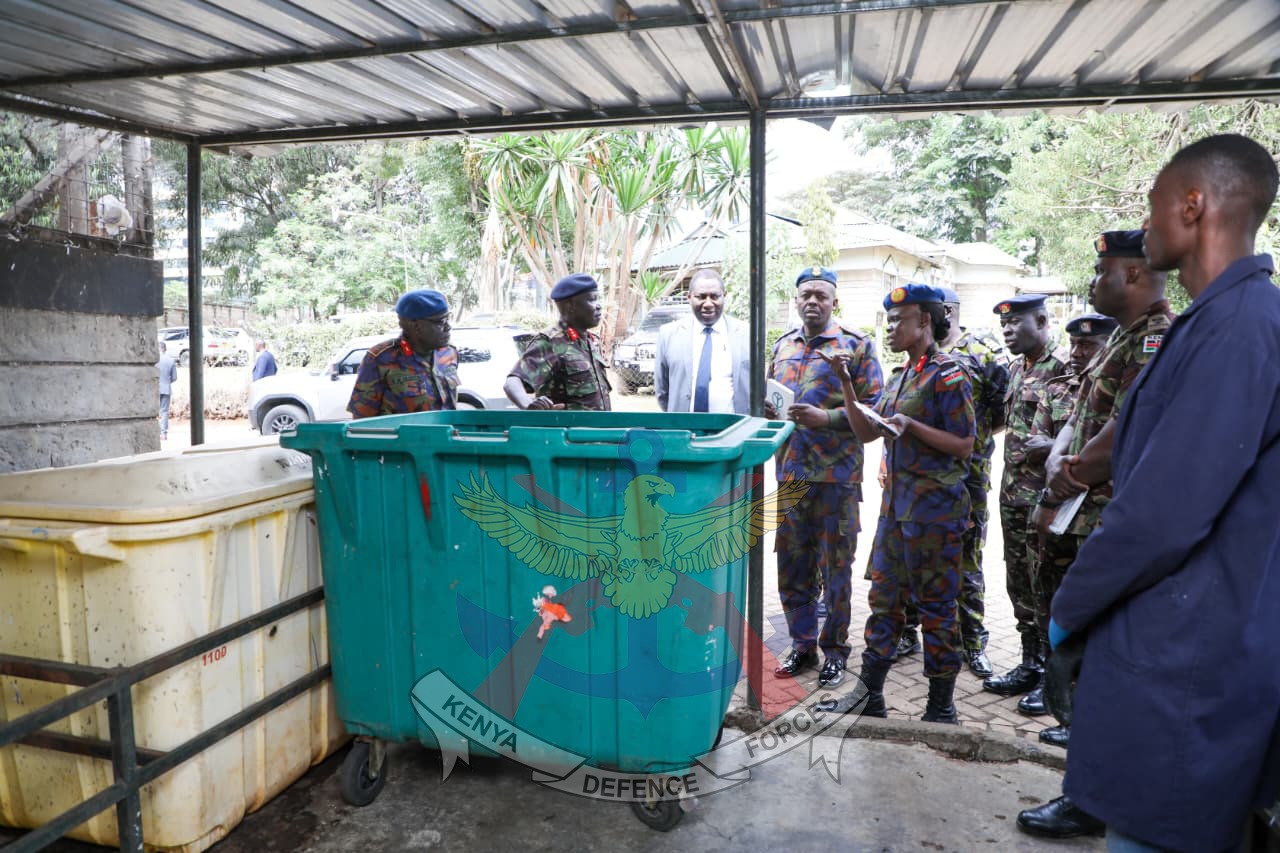
Effective waste management is increasingly becoming an important part of building clean, efficient and sustainable military installations.
Through Research, Science, Technology and Innovation (RSTI), the Kenya Defence Forces (KDF) is developing practical solutions that transform waste from a disposal challenge into a valuable source of energy and reusable resources.
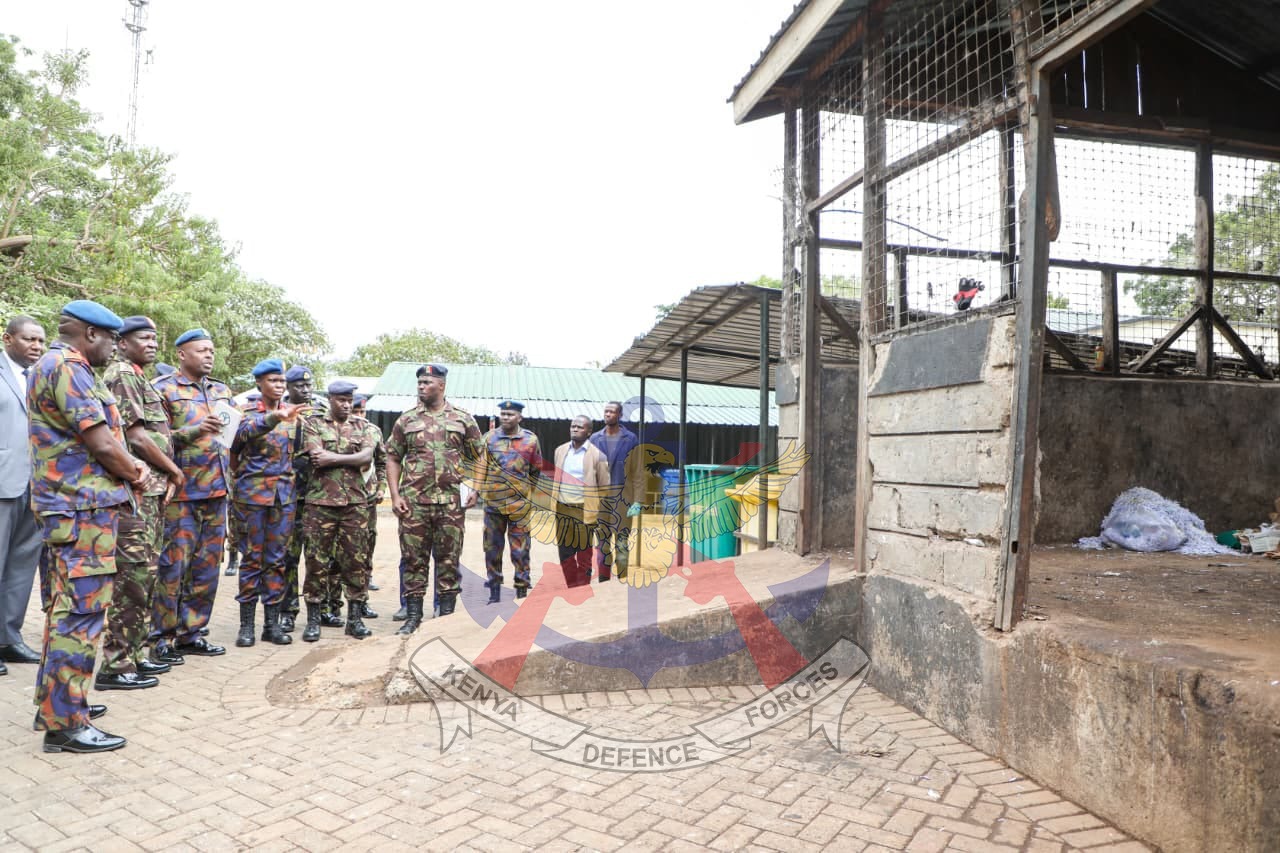
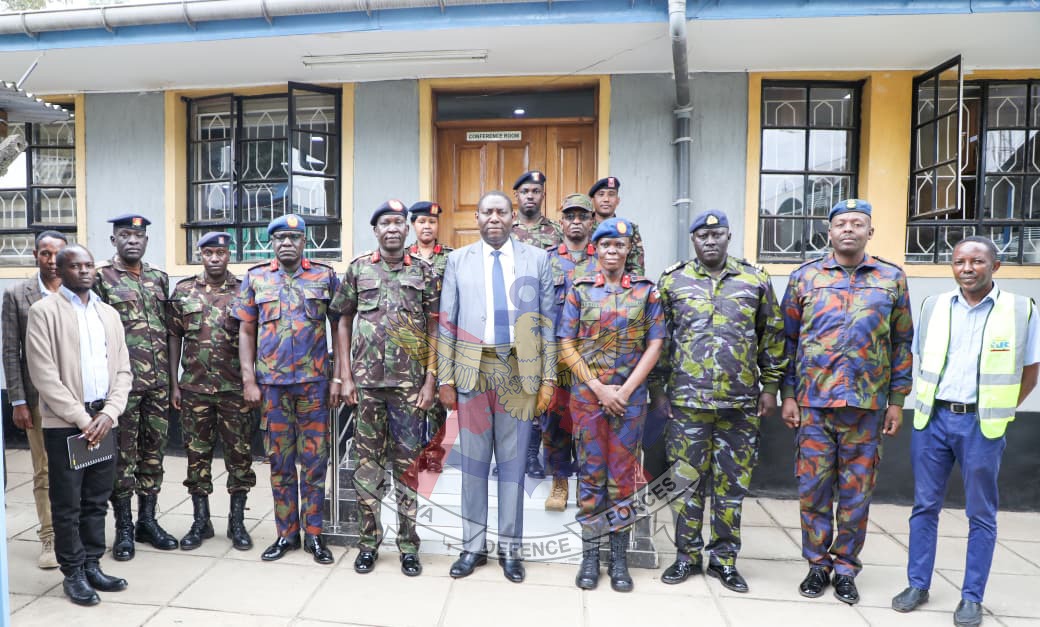
At Water Camp Cantonment, Defence National Security Industries (DNSI), under the leadership of Director General Major General Faustino Lobaly, is implementing the Defence Headquarters Camp Administration Unit (DHQ CAU) Integrated Solid Waste Management System (ISWMS). The initiative is transforming how waste is collected, processed and recovered within the installation.
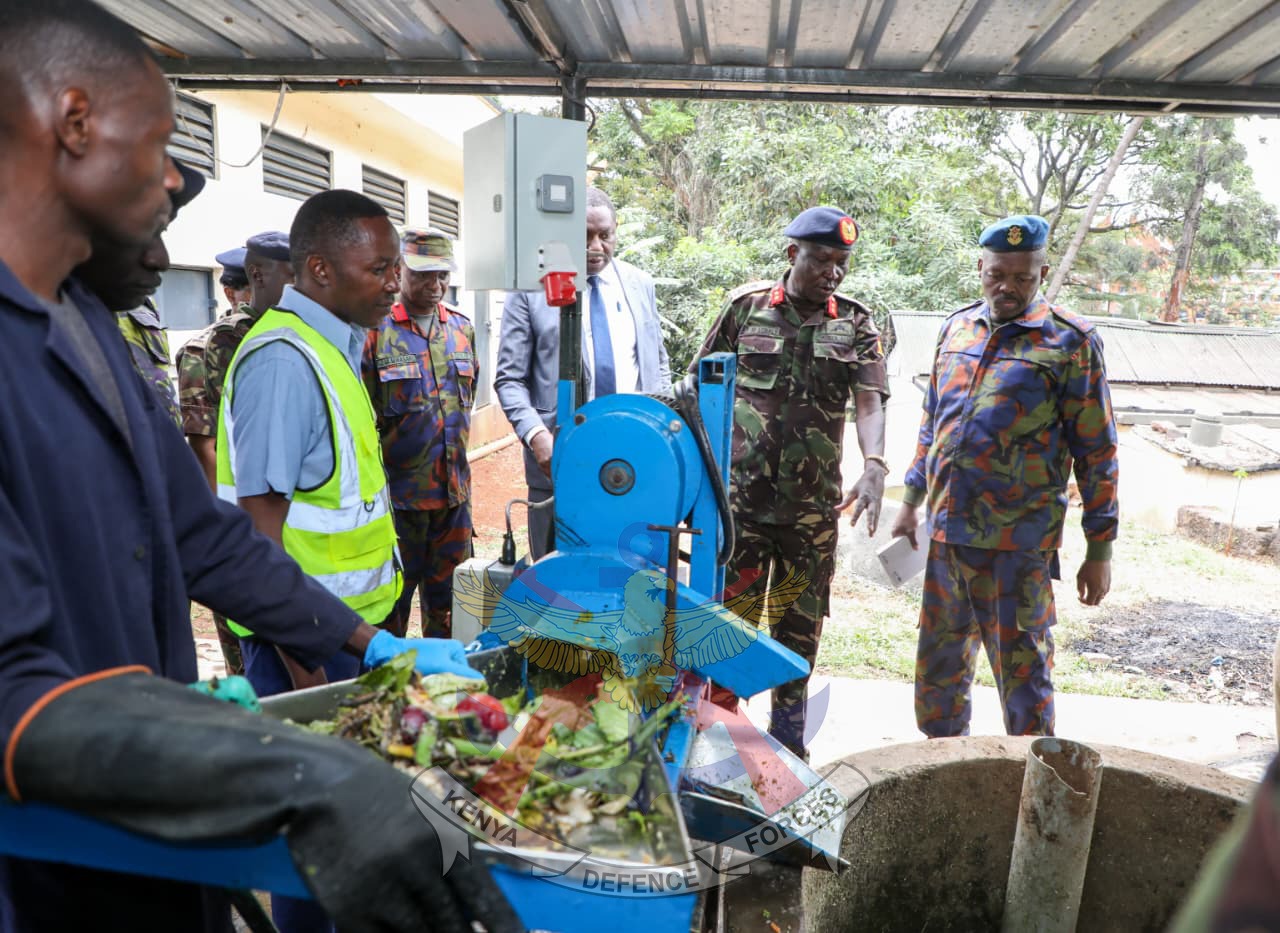
Central to the system is a waste-to-energy model that integrates biogas production, recycling and resource recovery. Food waste generated from the messes is channelled into a modern biogas plant, where it is processed to produce renewable energy. The resulting biogas is compressed and stored for use at the DHQ CAU Warrant Officers and Sergeants Mess, turning everyday organic waste into a practical source of energy.
The project also incorporates a paper and plastic baler for processing non-biodegradable waste. By compacting recyclable materials, the equipment improves waste segregation and handling, facilitates recycling and reduces the volume of waste requiring final disposal.
Technical collaboration between DNSI and the Numerical Machining Complex (NMC) has further enhanced the system’s efficiency and reliability. NMC has supported the restoration of the biogas supply, rerouting of pipelines and improvement of slurry preparation. Backup shredders have also been incorporated to strengthen the processing of biodegradable waste and sustain continuity of operations.
Technology is playing an increasingly important role in the system’s development. Plans to integrate smart waste bins and Internet of Things (IoT)-enabled monitoring of the biogas digester will provide improved oversight of waste collection and processing. Automated baling systems are also expected to enhance efficiency in handling recyclable materials.
Beyond renewable energy generation, the process produces bioslurry, a nutrient-rich by-product that can be utilised as organic fertiliser. This creates a circular system in which waste generated within the installation is progressively converted into energy, recyclable materials and agricultural inputs.
The ISWMS at Water Camp demonstrates the practical application of RSTI in addressing everyday operational and environmental challenges within military establishments. It also illustrates how locally driven innovation can contribute to resource efficiency, environmental sustainability and reduced dependence on conventional energy and waste-disposal systems.
By turning waste into value, KDF is advancing a more sustainable approach to managing its installations while strengthening energy efficiency and institutional self-reliance. The initiative provides a practical model that can inform the development of similar waste-management solutions across other KDF establishments.
Add Comment