
The Kenya Defence Forces (KDF) has intensified its environmental security operations, deploying military aviation capabilities and mobilising personnel across the Services to restore degraded ecosystems, protect critical natural resources and counter climate-related threats to national stability.
The nationwide Mazingira Day activities, held on 10 October 2026, underscored the growing recognition of climate change and environmental degradation as security threat multipliers capable of intensifying resource-based conflicts, undermining livelihoods and weakening national resilience.
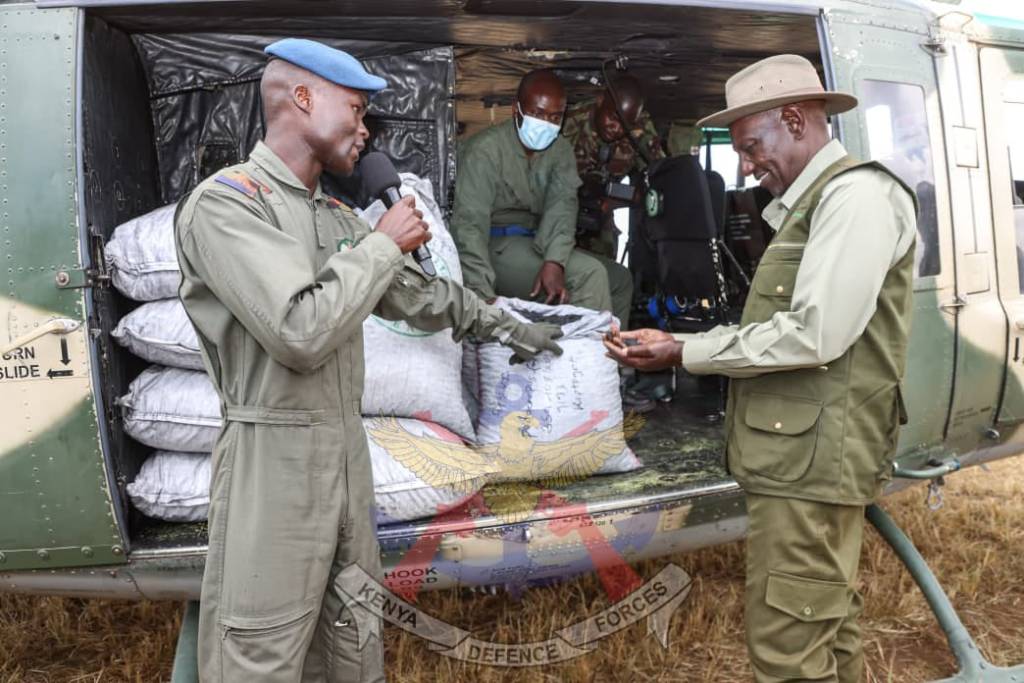
The President of the Republic of Kenya and Commander-in-Chief of the Defence Forces, H.E. Dr William Samoei Ruto, presided over the national celebrations at Elgon Downs Farm, Kenya Seed Company Limited, in Endebess, Trans Nzoia County, where the Kenya Air Force demonstrated aerial seeding technology using a Huey helicopter over 35 hectares of Kiptogot Forest Station.
The initiative, undertaken in partnership with the Kenya Forestry Research Institute (KEFRI) and other stakeholders, forms part of a programme targeting the restoration of more than 33,000 hectares of degraded forest landscapes.
President Ruto commended participating institutions for embracing innovative environmental restoration approaches and called for collective national responsibility in tree growing, conservation and sustainable management of natural resources.
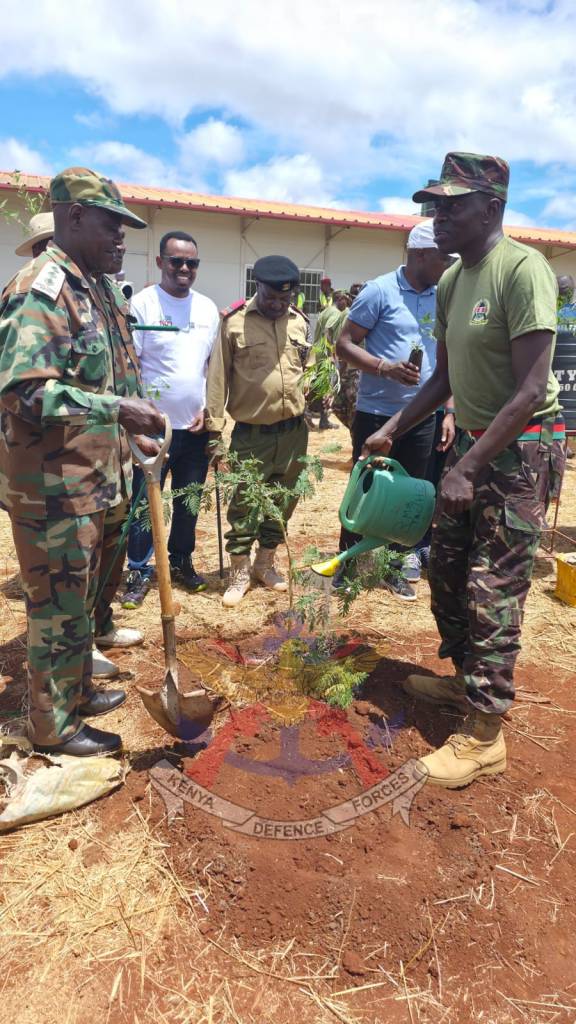
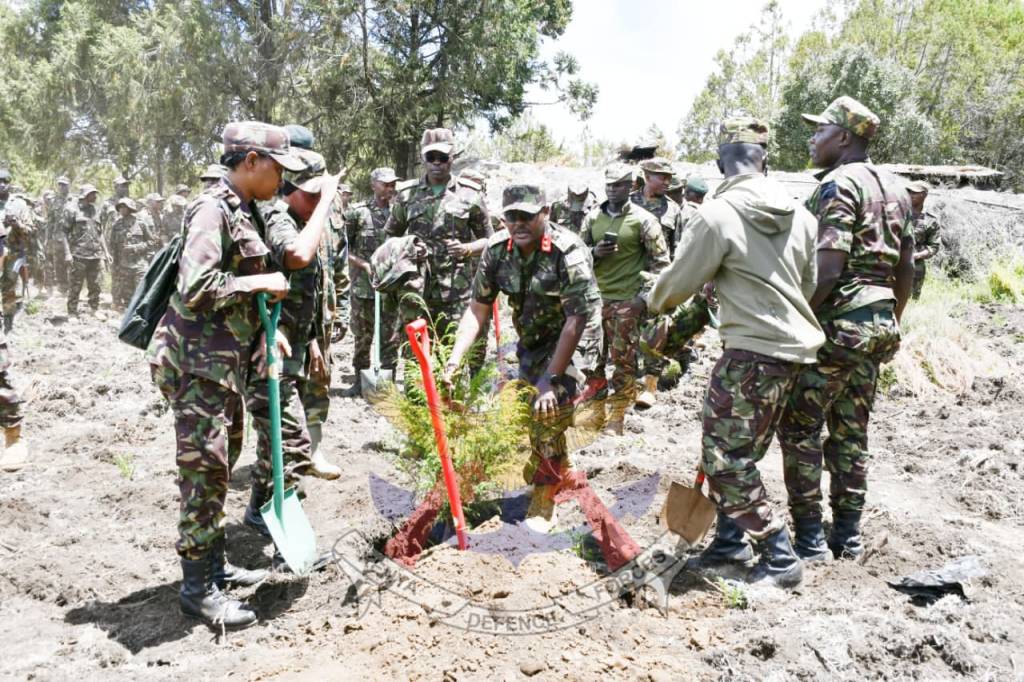
At the Defence Forces Recruits Training School (DFRTS), Commander Kenya Army, Lieutenant General David Ketter, led environmental conservation activities alongside the Principal Secretary, State Department for Tourism, Hon. Julius Bitok, and Uasin Gishu Deputy Governor, Hon. Evans Kapkea.
Lieutenant General Ketter warned that environmental degradation and climate change increasingly threaten national security by intensifying competition over natural resources, disrupting livelihoods and exposing communities to instability.
“For the Kenya Defence Forces, climate change is not merely an environmental concern; it is also a security challenge,” he stated.
He urged military installations to lead in environmental protection through tree growing, water conservation, pollution control and sustainable resource management, emphasising that environmental security is integral to national defence and resilience.
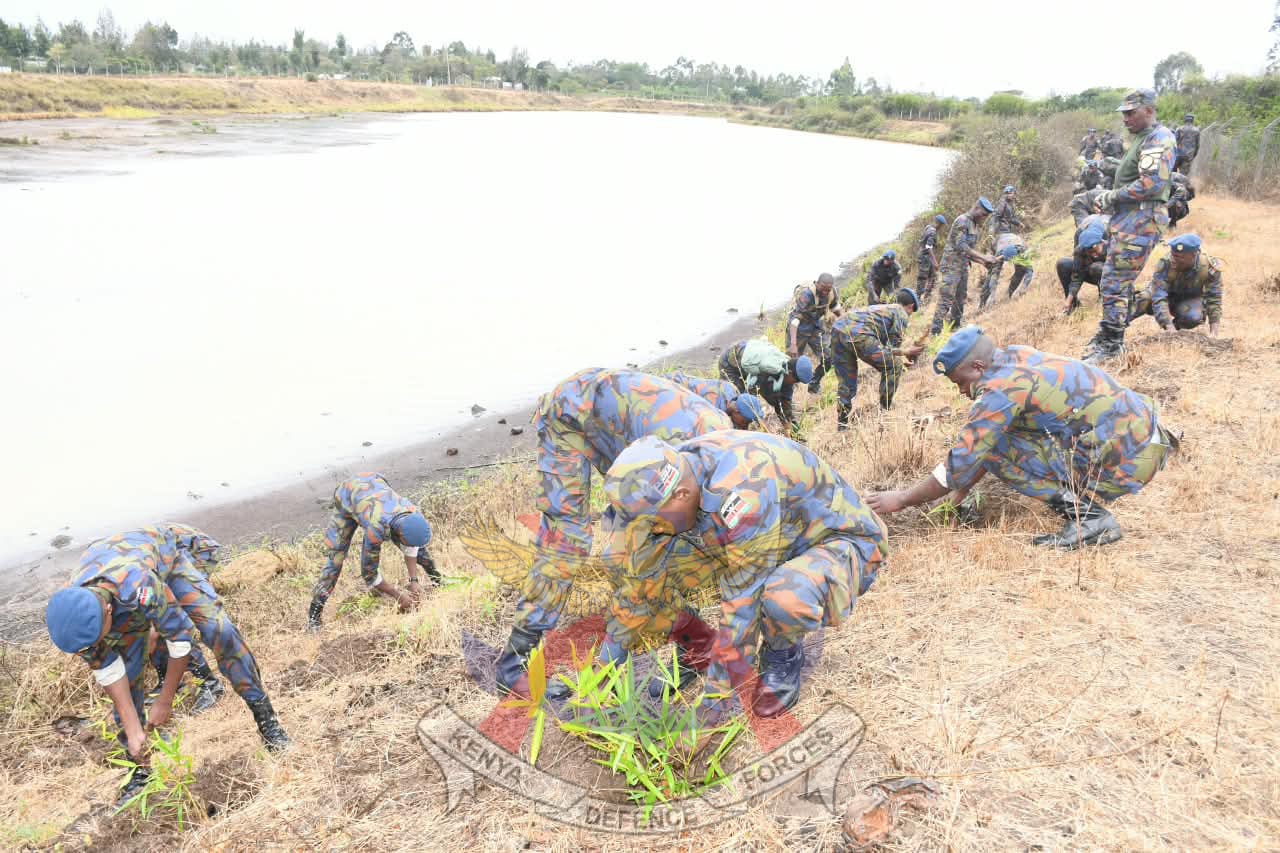
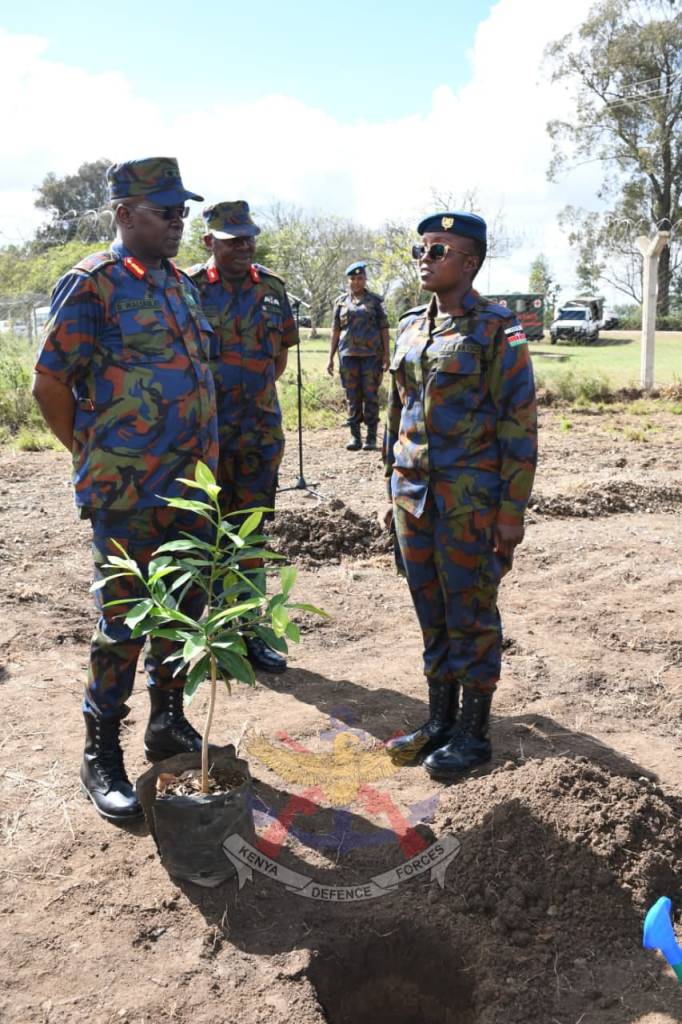
At Laikipia Air Base, Commander Kenya Air Force, Major General Bernard Waliaula, led personnel alongside soldiers from the British Army Training Unit Kenya (BATUK) in a tree-growing exercise. Similar activities were conducted at Moi, Wajir and Embakasi Air Bases and other formations, with the Service collectively planting 15,000 trees.
Major General Waliaula emphasised that lasting environmental security depends on sustained stewardship rather than the number of seedlings planted.
“Planting a tree is only the beginning; our true success lies in nurturing it to maturity. We must measure our commitment not by the number of trees planted today, but by the living legacy we secure for future generations,” he stated.
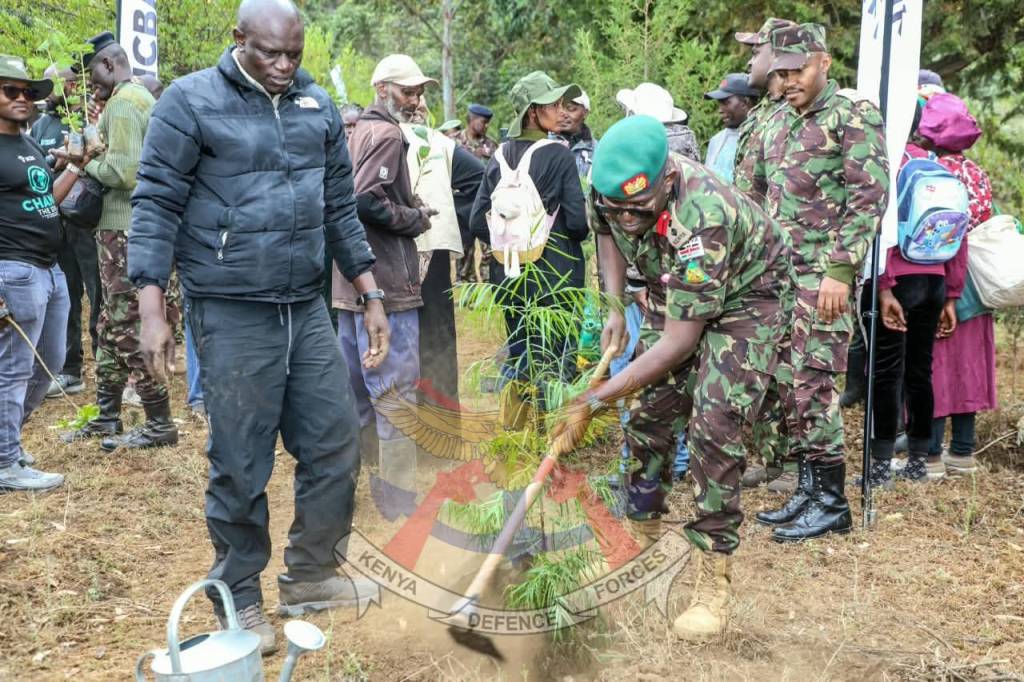
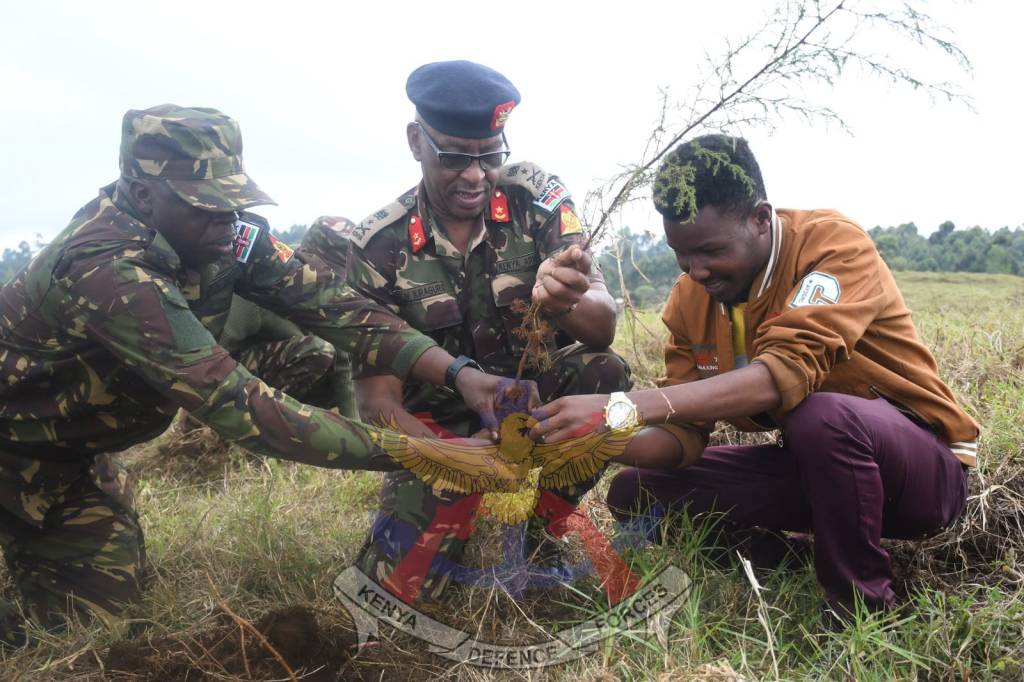
At Logman Forest Station in Nakuru County, the Kenya Military Academy (KMA) donated 60,000 indigenous tree seedlings in a multi-agency restoration initiative involving security agencies, environmental institutions and local communities.
The Commandant KMA, Major General Joel Muriungi M’Arimi, commended the participating stakeholders and called for sustained community involvement in reforestation. He emphasised that protecting and nurturing planted seedlings was essential to achieving meaningful ecosystem recovery and Kenya’s target of growing 15 billion trees by 2032.
The Kenya Navy reinforced coastal environmental security through the planting of 50,000 mangrove seedlings along the Dongo Kundu coastline, led by Commander Kenya Navy Base Mtongwe, Brigadier William Kiprotich. The initiative sought to restore marine ecosystems, protect biodiversity and strengthen natural shoreline defences against erosion and climate-related hazards.
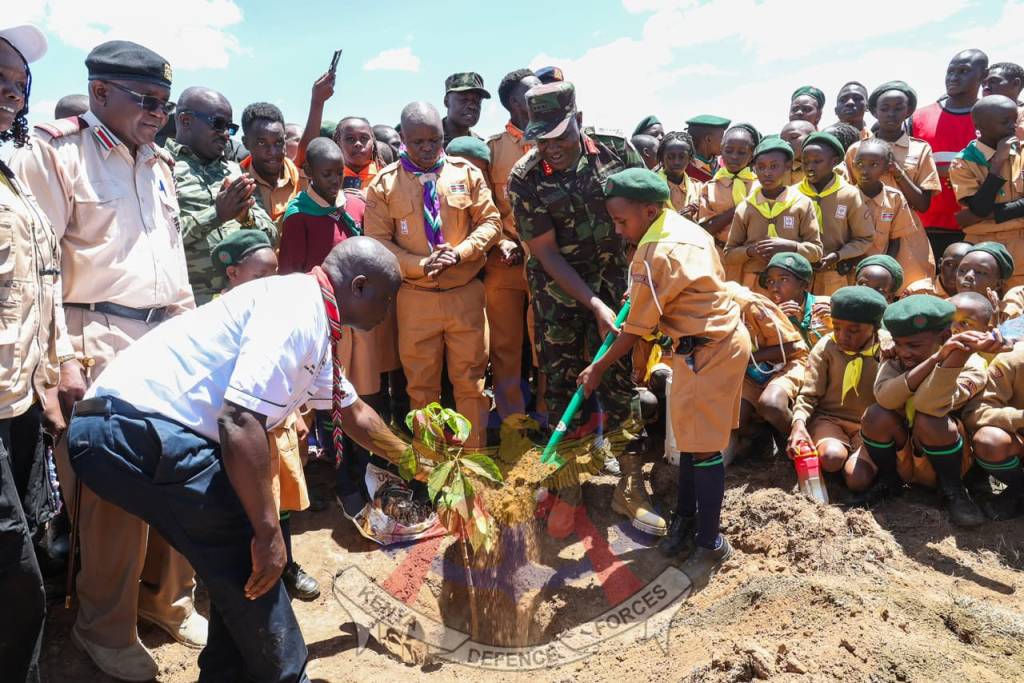
Additional restoration activities were undertaken at Marania Forest on Mount Kenya, where 60,000 seedlings were planted, alongside exercises at Kinale Forest, Karare Barracks, Meru University, Kangaita Primary School, Close Operations Headquarters and Tarbaj Technical Training College in Wajir County.
At Meru University, Armoured Brigade personnel contributed to planting 10,000 seedlings, while troops at Karare Barracks planted 4,000 seedlings, further extending the KDF Environmental Security Soldiers Programme across military formations and civilian communities.
The coordinated activities demonstrated the strategic contribution of military capabilities, inter-agency partnerships and community participation in confronting emerging environmental security threats.
Held under the theme “Our Environment, Our Responsibility: Collective Action for Tree Growing and Environmental Stewardship,” Mazingira Day 2026 reinforced the critical relationship between environmental protection, operational readiness and national security.
Through technological innovation, ecosystem restoration and sustained environmental stewardship, KDF continues to strengthen Kenya’s resilience against climate-induced threats, reaffirming that environmental security is a strategic component of national defence and a vital safeguard for long-term peace, stability and sustainable development.

Add Comment