
Modern military effectiveness increasingly depends on the ability to develop, adapt and sustain technologies that respond to evolving operational demands. For the Kenya Defence Forces (KDF), investment in Research, Science, Technology and Innovation (RSTI) is strengthening defence modernization, fostering self-reliance and accelerating the development of indigenous capabilities that enhance mission readiness while supporting national industrial growth.
Through the Defence National Security Industries (DNSI), KDF continues to promote home-grown innovations that reduce dependence on external suppliers, improve operational efficiency and provide practical solutions to emerging security challenges. Guided by the principles of the Buy Kenya, Build Kenya (BKBK) initiative, research efforts are focused on developing technologies that are relevant, scalable, affordable and driven by local expertise.
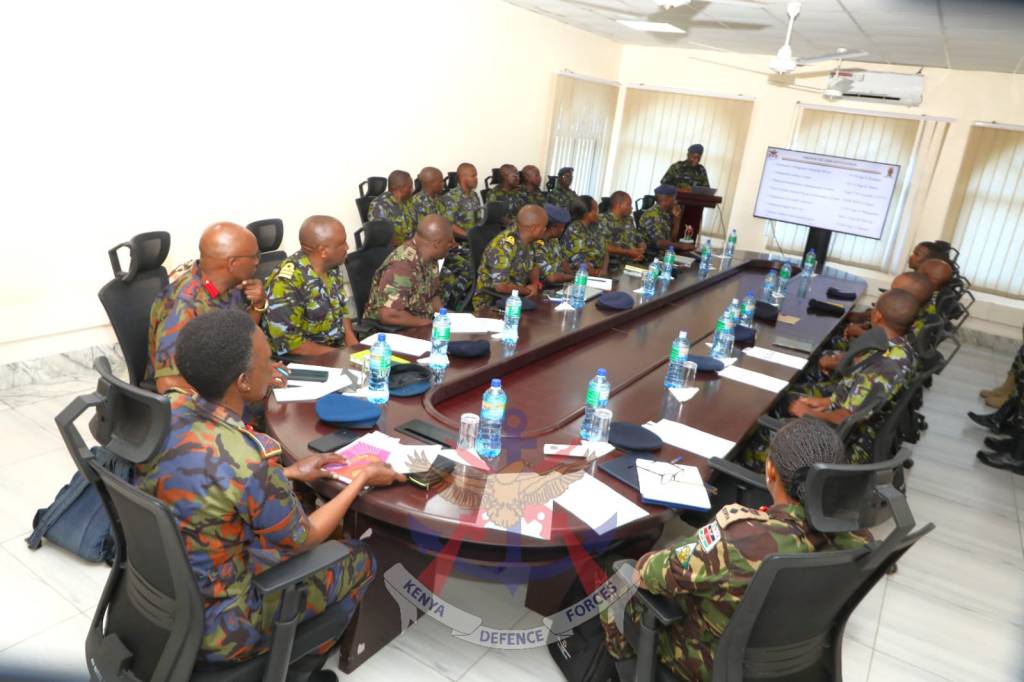
To evaluate progress and shape future investment priorities, a Defence Headquarters delegation led by the Chief of Research and Development, Brigadier Margaret Kikech, conducted a comprehensive assessment of Research, Science, Technology and Innovation projects across KDF formations. Coordinated by the Research and Development Branch under DNSI, the exercise reviewed initiatives implemented by the Services, Semi-Autonomous Government Agencies (SAGAs), Defence Controlled Units (DCUs) and Government-Owned Enterprises (GOEs), while identifying projects with the greatest potential to enhance operational capability during the 2026/27 Financial Year.
The assessment began at the Kenya Army Corps of Electrical and Mechanical Engineering (KACEME), where the delegation reviewed engineering innovations aimed at strengthening equipment sustainment and technical support. At the Kenya Army Corps of Signals (KACS), the team evaluated digital technologies designed to improve command and control, communications, force protection, information management and digital range scoring, all of which contribute to more effective operational planning and execution.
The delegation later visited the Defence Forces Technical College (DEFTEC) and the Air Defence Radar (ADR), where innovators showcased a broad range of indigenous technologies supporting defence modernization. These included unmanned aerial vehicle (UAV) systems, weapons modernization initiatives, advanced ballistic computation technologies, digital solutions and other locally developed innovations intended to enhance operational readiness, extend the service life of military equipment and strengthen national defence manufacturing capabilities.
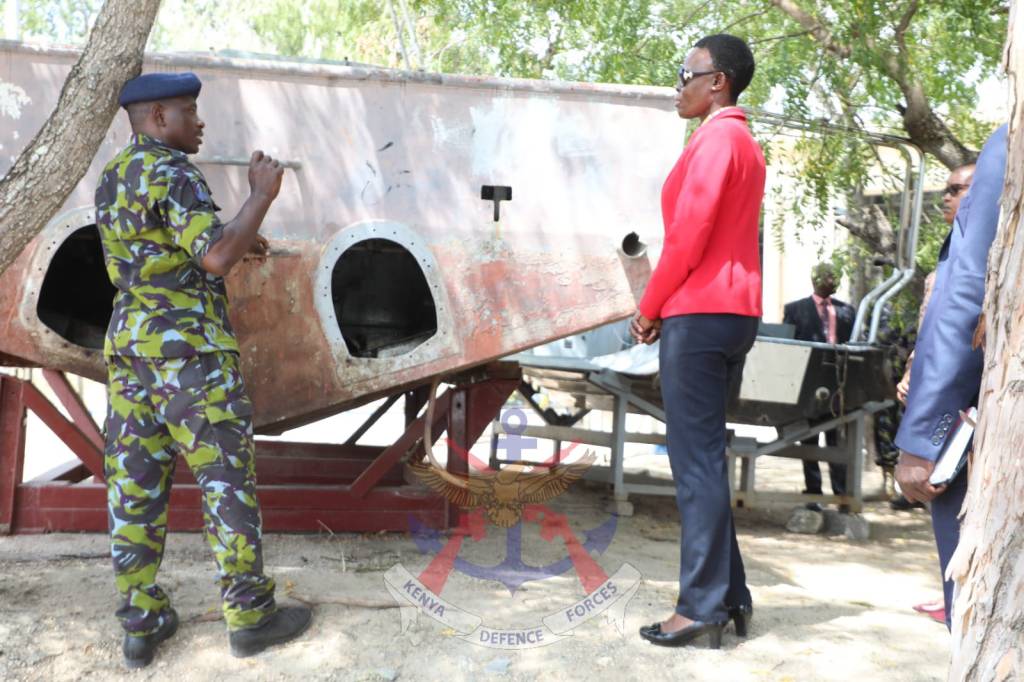
As part of the assessment, the team also visited M/S Metal Equipment Company Limited, where locally fabricated components for KDF projects are being produced. The engagement highlighted the growing contribution of Kenyan industry to defence production and reinforced the value of strategic partnerships between the military and the country’s manufacturing sector in advancing defence industrialization.
The assessment continued at Kenya Navy Headquarters, where the Commander Kenya Navy hosted the delegation for presentations on future-focused research initiatives intended to improve maritime operational readiness, efficiency and mission effectiveness. The projects demonstrated the Navy’s long-term vision of integrating innovation into capability development while addressing evolving maritime security requirements.
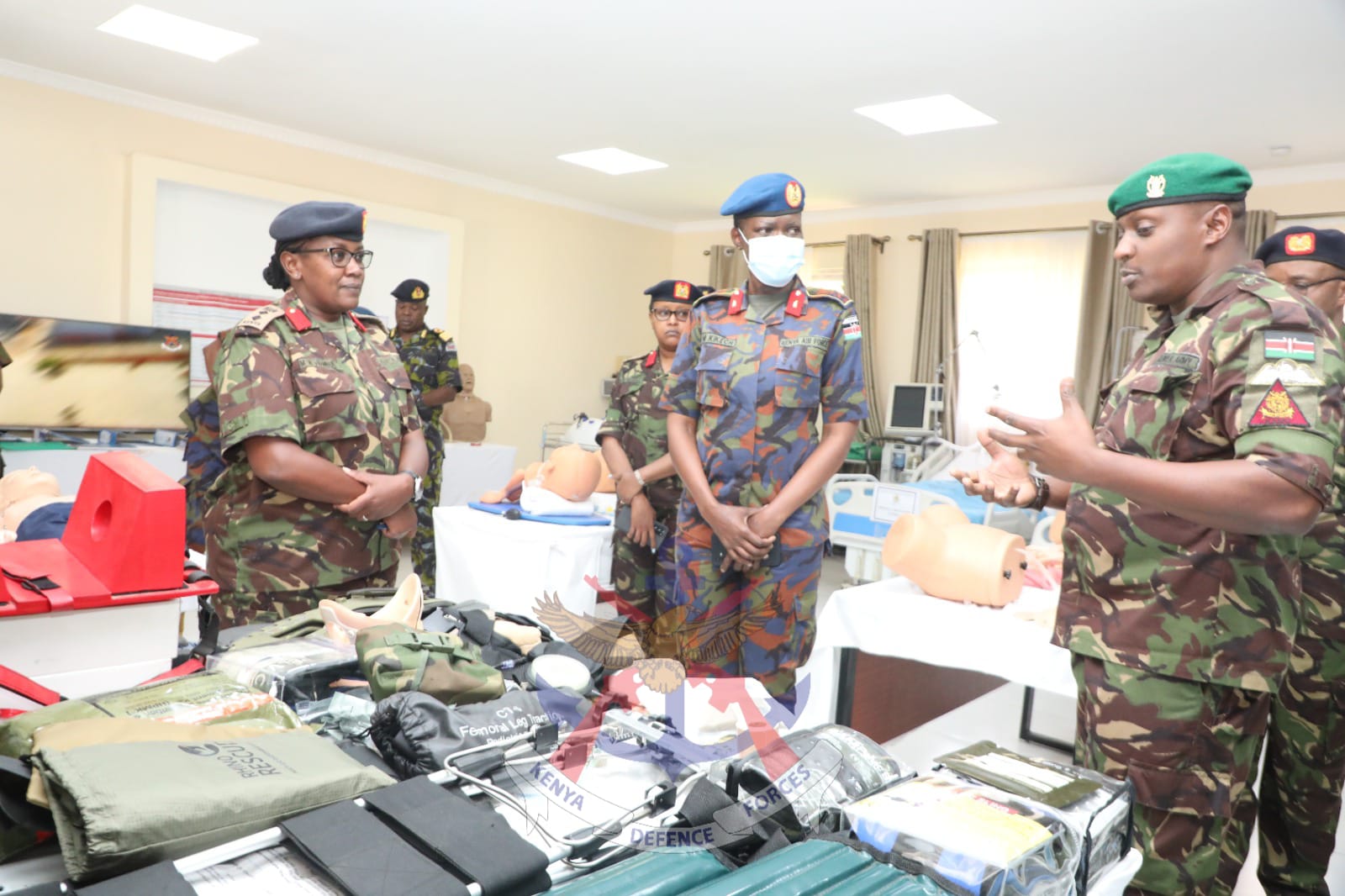
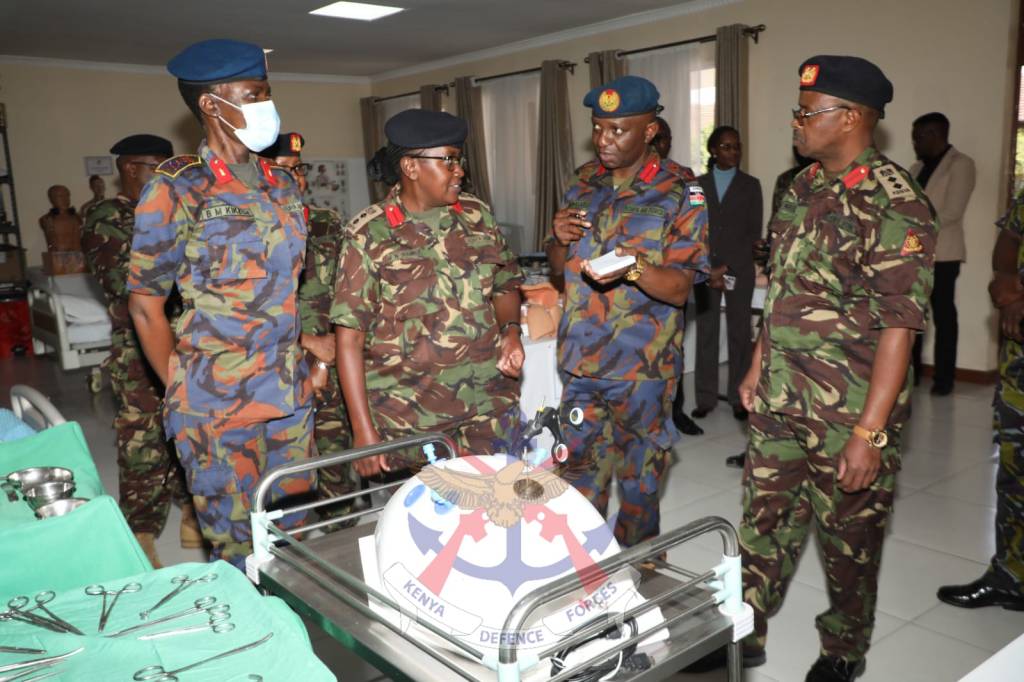
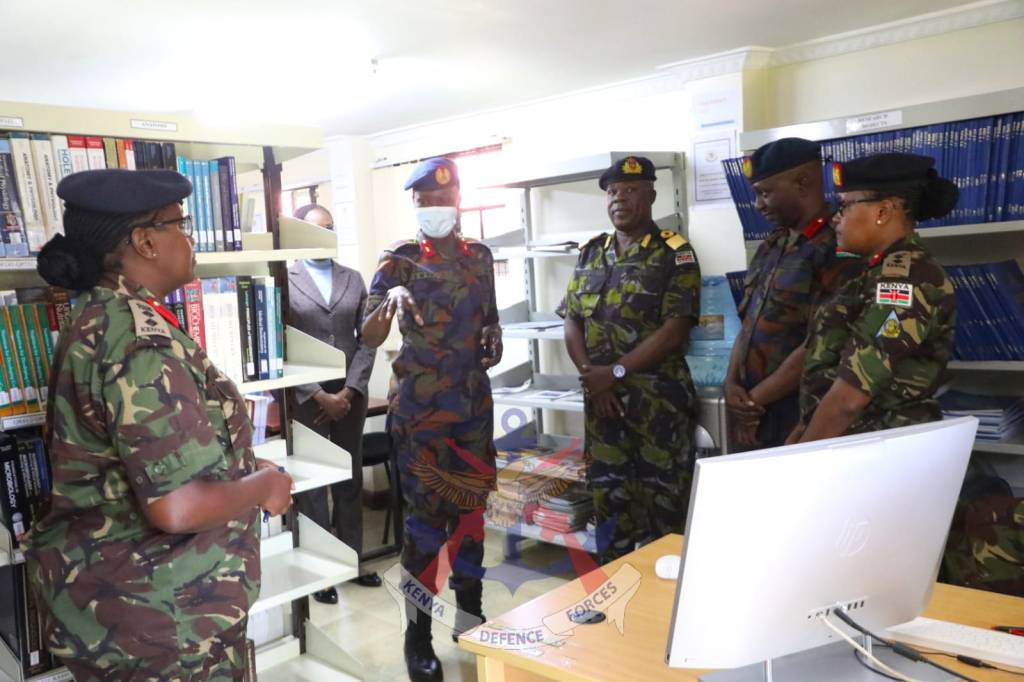
The final phase of the assessment was conducted at the Defence College of Health Services (DCHS), where discussions focused on strengthening applied research in military healthcare. The engagement explored collaborative initiatives aimed at transforming academic research into practical medical solutions that enhance healthcare delivery for Service personnel while contributing to broader national health priorities. By bridging research and implementation, the college continues to position itself as a centre of excellence in defence health innovation.
Speaking during the assessment, Brigadier Kikech commended researchers and innovators for developing practical solutions that directly address operational requirements. She encouraged them to deepen collaboration, embrace emerging technologies and continue advancing research that strengthens the Kenya Defence Forces’ modernization agenda, accelerates defence industrialization and delivers sustainable home-grown capabilities to support future missions.
Add Comment