
Sustaining peace after conflict requires more than the signing of an agreement. It demands continued dialogue, confidence-building, credible monitoring and the collective determination of all parties to translate negotiated commitments into lasting stability.
These priorities remain central to efforts by the African Union (AU) to consolidate peace in northern Ethiopia following the signing of the Permanent Cessation of Hostilities Agreement. Continued engagement among the parties, supported by effective monitoring and verification, remains critical to preserving the gains achieved and strengthening prospects for durable peace.
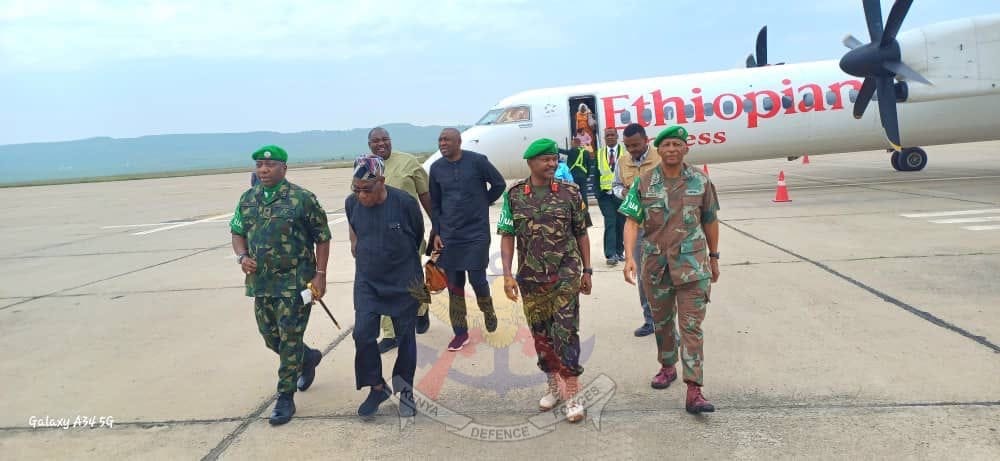
The African Union High Representative for the Horn of Africa, His Excellency Olusegun Obasanjo, recently visited Mekelle as part of ongoing efforts to support implementation of the peace agreement and advance dialogue among key stakeholders.
Upon arrival, the former Nigerian President was received by the Head of the African Union Mission, Major General Samad Akesode, alongside personnel serving under the African Union Monitoring, Verification and Compliance Mechanism.
Among the monitors were senior Kenya Defence Forces officers Colonel Elijah Mbithi, Colonel Jacinta Mganu and Lieutenant Colonel Maurice Nyaga, whose participation highlights Kenya’s contribution to African-led mechanisms supporting peace and stability in the Horn of Africa.
The monitoring mechanism plays an important role in supporting implementation of the cessation of hostilities by maintaining an operational presence on the ground, facilitating engagement and providing a framework through which compliance with agreed obligations can be assessed. Such mechanisms are essential in building confidence between former adversaries and reducing the risk of renewed confrontation.
The High Representative’s engagement in Mekelle further underscored the value of sustained diplomatic engagement alongside monitoring and verification. Peace agreements create the framework for ending armed confrontation, but their durability depends on continued communication, mutual confidence and the willingness of stakeholders to address outstanding issues through peaceful means.
Kenya’s participation in the monitoring mechanism also illustrates the wider contribution of regional actors to African peace and security. Through the deployment of experienced military personnel, the Kenya Defence Forces continues to contribute professional expertise to multinational and continental initiatives aimed at preventing conflict, supporting peace processes and strengthening regional stability.
The Tigray peace process carries significance beyond northern Ethiopia. Stability in Ethiopia remains closely connected to the wider security and development of the Horn of Africa, making sustained implementation of the peace agreement a regional priority.
As the African Union continues to facilitate dialogue and support implementation of the agreement, the presence of monitors on the ground remains an important bridge between diplomatic commitments and practical progress.
The visit to Mekelle therefore reinforces a central principle of sustainable peacebuilding: agreements may silence the guns, but enduring peace is secured through dialogue, trust, verification and sustained collective action.

Add Comment