
The Western Indian Ocean is a strategic maritime corridor that supports international trade, regional economies and the security interests of nations across the region and beyond. Its significance, however, continues to be challenged by evolving maritime threats, including piracy and terrorism, whose transnational nature demands sustained cooperation, information sharing and coordinated action among maritime security partners.
Strengthening naval partnerships therefore remains an important pillar in securing the maritime domain. Through sustained engagements with friendly and partner navies, the Kenya Navy continues to deepen professional relations, enhance interoperability and build collective capacity to respond effectively to emerging maritime security challenges.
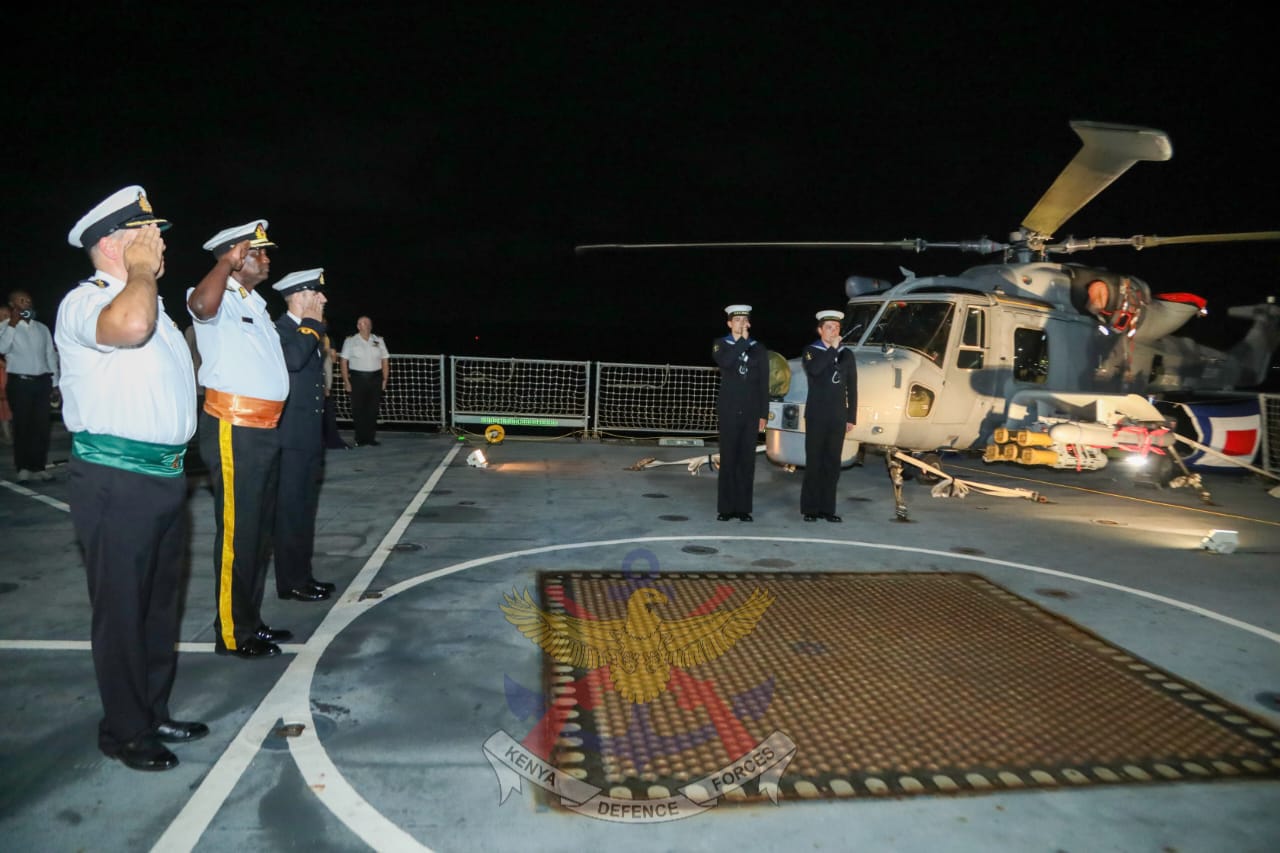
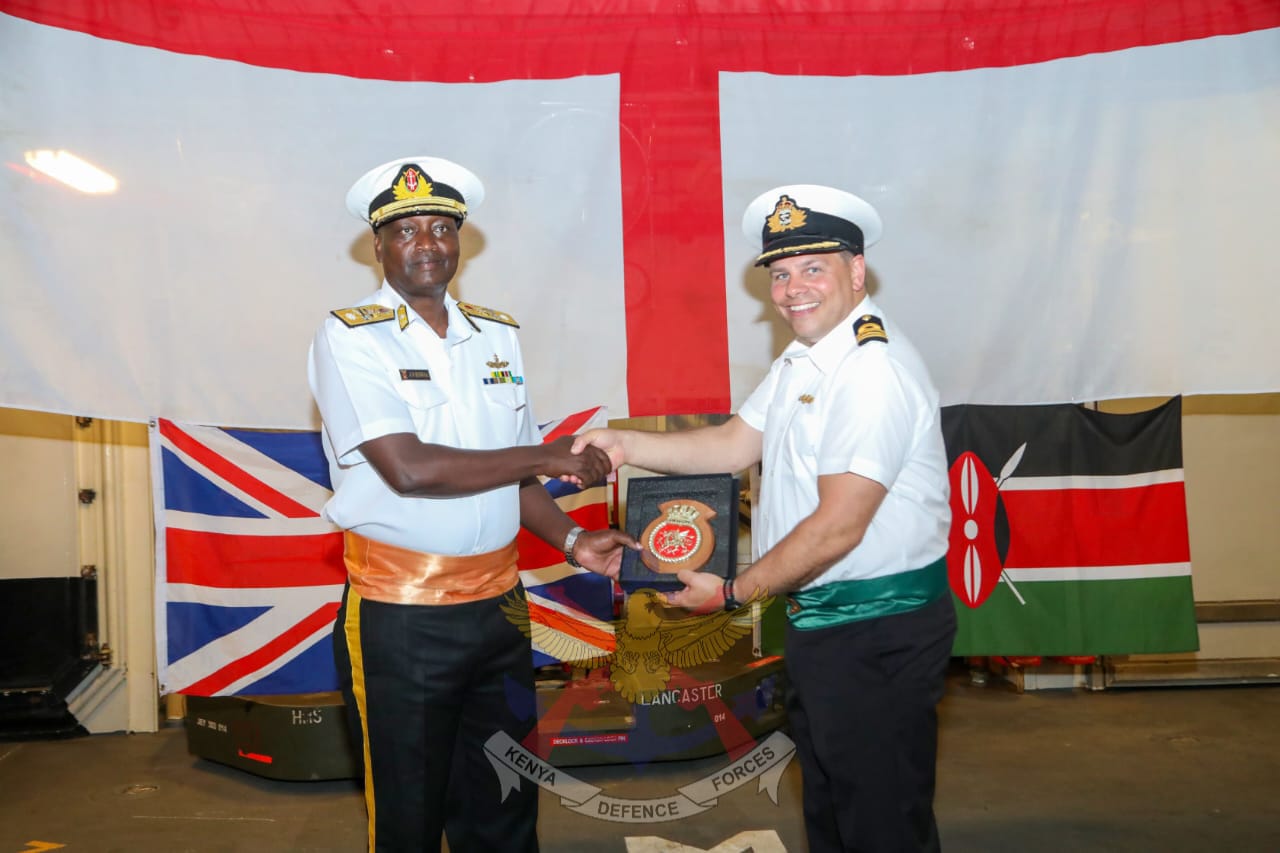
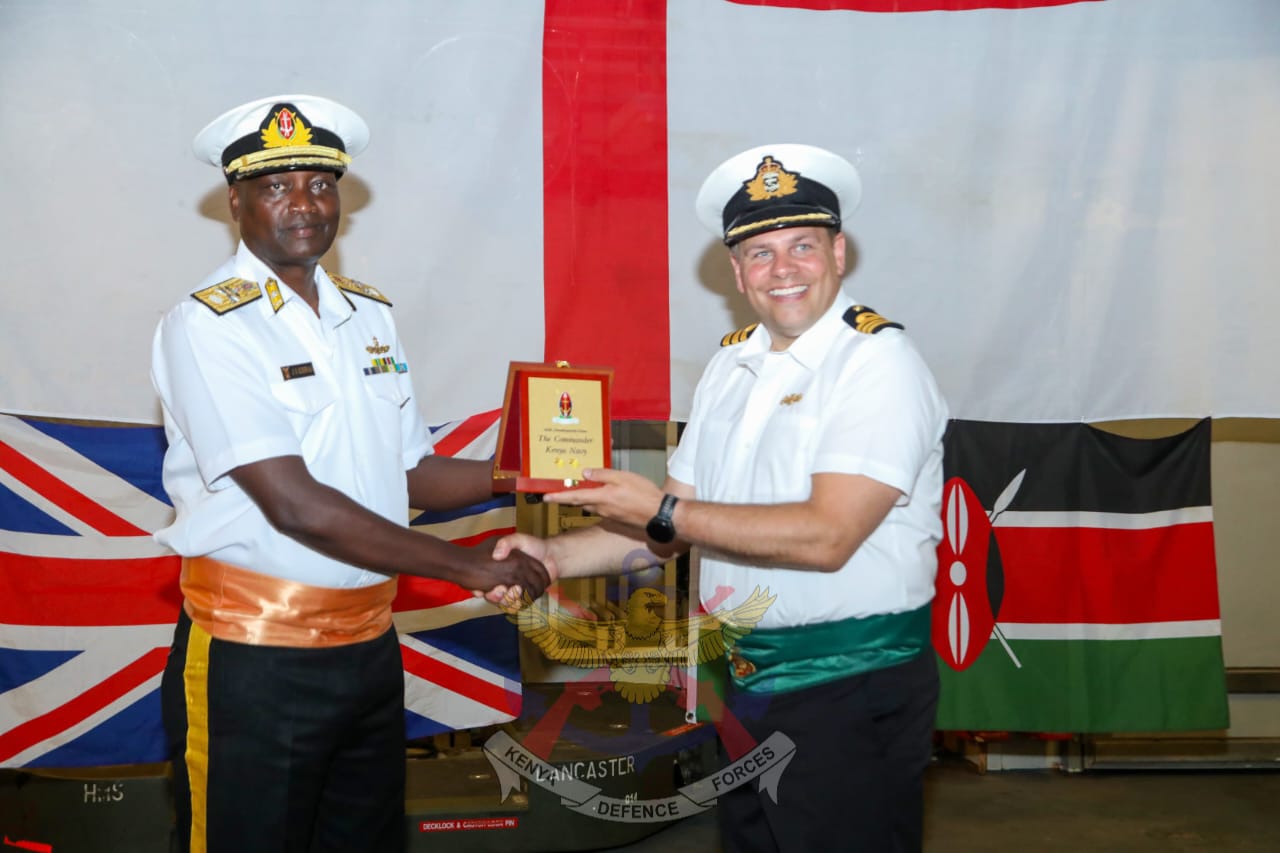
Recently, Deputy Commander Kenya Navy, Brigadier Sankale Kiswaa, accompanied by Kenya Navy officers, attended a Request the Pleasure of Your Company (RPC) reception hosted aboard HMS Dragon while the Royal Navy vessel was berthed at the Port of Mombasa. The engagement provided an opportunity to strengthen professional ties between the Kenya Navy and the Royal Navy while advancing dialogue on shared maritime security interests.
Speaking during the reception, Brigadier Kiswaa welcomed HMS Dragon to Mombasa and noted that the port visit provided a valuable platform for personnel from the two navies to exchange knowledge, share operational experiences and strengthen professional interaction.
He further observed that such engagements create opportunities to explore areas of future cooperation, including joint training, maritime exercises, information sharing and other initiatives aimed at enhancing operational effectiveness and interoperability between the two navies.
Deputy British High Commissioner to Kenya, Diana Dalton, highlighted the depth of the security relationship between Kenya and the United Kingdom, describing it as one of the strongest in Africa. She noted that the two countries continue to leverage their defence partnership to strengthen cooperation and develop professional capabilities.
She added that efforts to enhance national and regional security have broader benefits for communities and economies, contributing to safer environments, greater stability and sustainable prosperity. She emphasised the importance of Kenya and the United Kingdom continuing to work together towards a stronger and more secure future for East Africa.
Beyond the ceremonial aspects of the reception, the interaction underscored the operational value of sustained naval diplomacy. Regular engagements between maritime forces foster mutual understanding, strengthen trust and provide avenues for exchanging expertise necessary for coordinated responses to threats within the Western Indian Ocean.
The Kenya Navy–Royal Navy engagement also highlighted the longstanding professional relationship between the two services and the importance of maintaining practical cooperation through training, joint exercises, information exchange and professional development. These areas remain essential to improving interoperability and strengthening collective maritime security capabilities.
For Kenya, a secure maritime environment is integral to protecting national interests, safeguarding sea lines of communication and supporting the uninterrupted flow of international trade. Strong naval partnerships also contribute to regional stability by strengthening the ability of maritime security actors to anticipate, deter and respond to threats that transcend national boundaries.
Through continued engagement with friendly and partner navies, Kenya continues to cultivate professional and mutually beneficial defence relationships that strengthen maritime security. Such partnerships remain vital to securing the Western Indian Ocean, protecting shared interests and creating conditions for regional stability, economic growth and sustainable prosperity.
Add Comment