
Effective disaster preparedness and response are critical pillars of national security, public safety and resilience. As Kenya confronts increasingly complex natural and human-induced emergencies, the development of an integrated, responsive and well-coordinated national disaster management framework remains essential to safeguarding lives, protecting critical infrastructure and ensuring continuity of essential services.
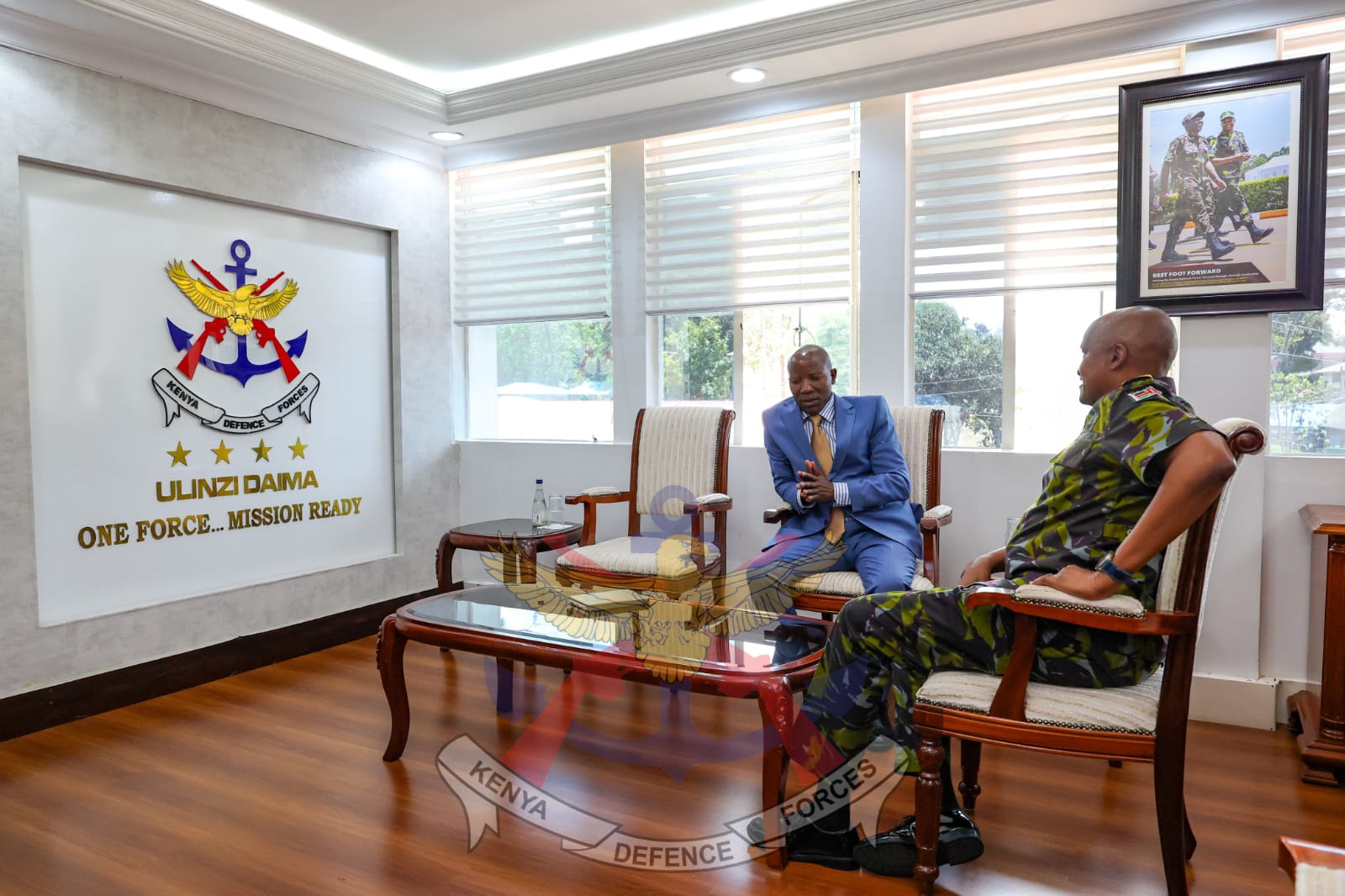
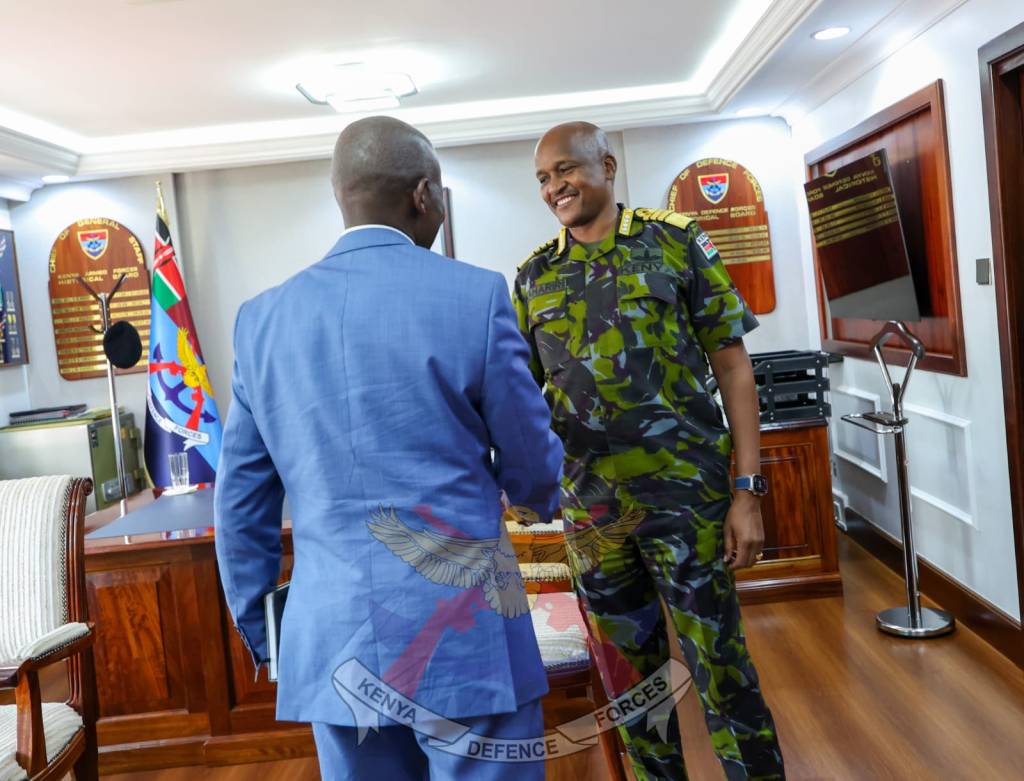
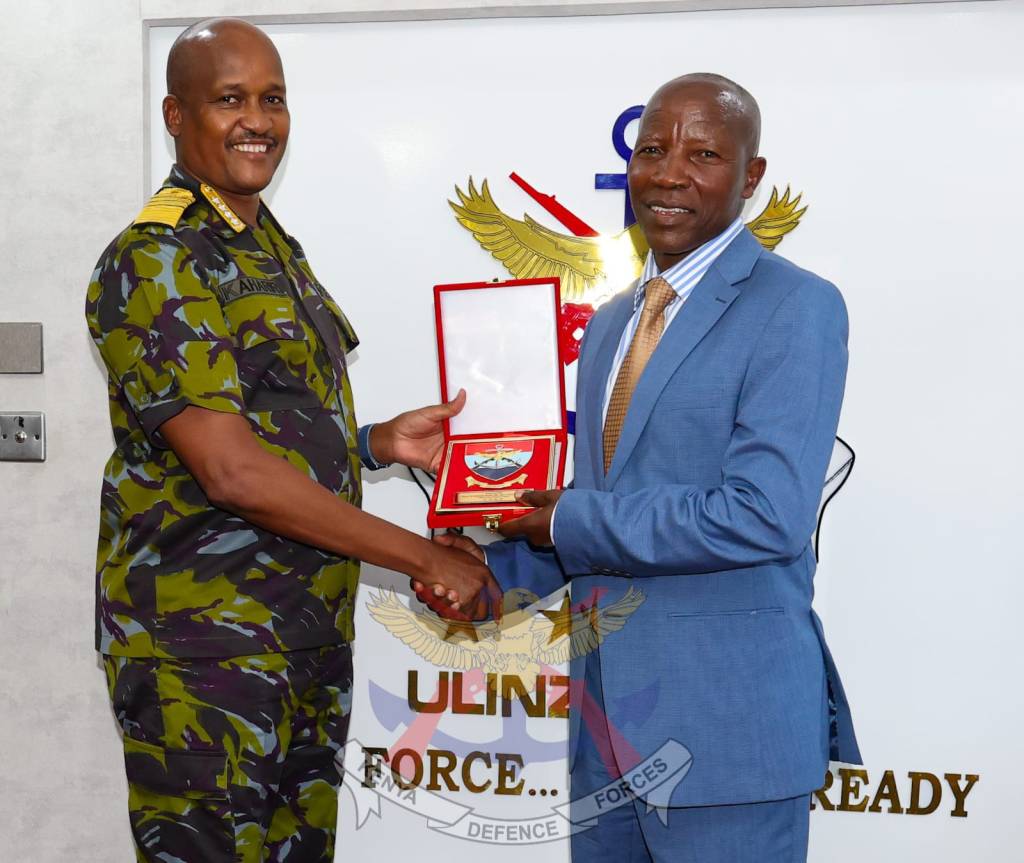
The Director of the National Disaster Operations Centre (NDOC), Colonel (Rtd) David Samoei, recently paid a courtesy call on the Chief of the Defence Forces (CDF), General Charles Kahariri, at Defence Headquarters. The engagement focused on national preparedness for the anticipated El Niño phenomenon, institutional reforms in disaster risk management and the strategic role of the Kenya Defence Forces (KDF) within the evolving national emergency response architecture.
During the discussions, Colonel (Rtd) Samoei briefed the CDF on Kenya’s disaster preparedness and response arrangements, highlighting measures being undertaken to enhance national readiness for potential emergencies associated with the anticipated El Niño phenomenon. He noted that NDOC had established a multi-agency emergency response team to facilitate coordinated monitoring, early intervention and effective mobilisation of resources.
The Director also outlined progress towards the proposed Disaster Risk Management Act, 2026, which seeks to provide a more comprehensive legal and institutional framework for disaster management. Central to the proposed reforms is the transformation of NDOC from a Directorate into an Authority, with an expanded mandate and institutional capacity to coordinate disaster risk reduction, preparedness, response and recovery across government agencies.
General Kahariri welcomed the proposed institutional transformation, describing it as an important opportunity to develop a more effective, accountable and responsive national disaster management system. He emphasised that the transition should be carefully structured to preserve institutional linkages, promote operational synergy and integrate the specialised capabilities of key national security institutions, particularly the KDF.
The CDF underscored the strategic value of KDF’s extensive experience in emergency response, command and control, operational planning, logistics and multi-agency coordination. He noted that these capabilities constitute an important national resource that could significantly enhance the proposed Authority’s operational effectiveness, particularly during large-scale disasters and complex emergencies requiring rapid mobilisation and coordinated intervention.
He further emphasised the importance of maintaining appropriate KDF representation within the proposed Authority’s leadership and staffing structures. Such an arrangement would facilitate the integration of military expertise into national disaster planning, enhance interoperability among responding agencies and provide an effective mechanism for mobilising specialised capabilities and resources when required.
Importantly, the CDF observed that a clearly defined institutional framework would promote unity of effort while allowing the KDF to remain focused on its primary constitutional mandate, with military support to civil authorities provided through established legal and operational mechanisms.
The discussions also highlighted the need to move beyond reactive emergency interventions towards a proactive, risk-informed national disaster management approach anchored on early warning, contingency planning, institutional preparedness and coordinated response capabilities.
General Kahariri reiterated the importance of a whole-of-government approach that brings together national security institutions, civilian agencies and other relevant stakeholders under a coherent coordination framework. He emphasised that effective disaster management requires clearly defined responsibilities, integrated planning, efficient resource utilisation and timely decision-making across all levels of government.
The engagement reaffirmed the importance of sustained civil-military collaboration in advancing Kenya’s disaster preparedness and response capabilities. The proposed institutional reforms present an opportunity to establish a more resilient national disaster management architecture capable of anticipating emerging risks, coordinating decisive interventions and safeguarding national security, lives and livelihoods.
Add Comment